About Me
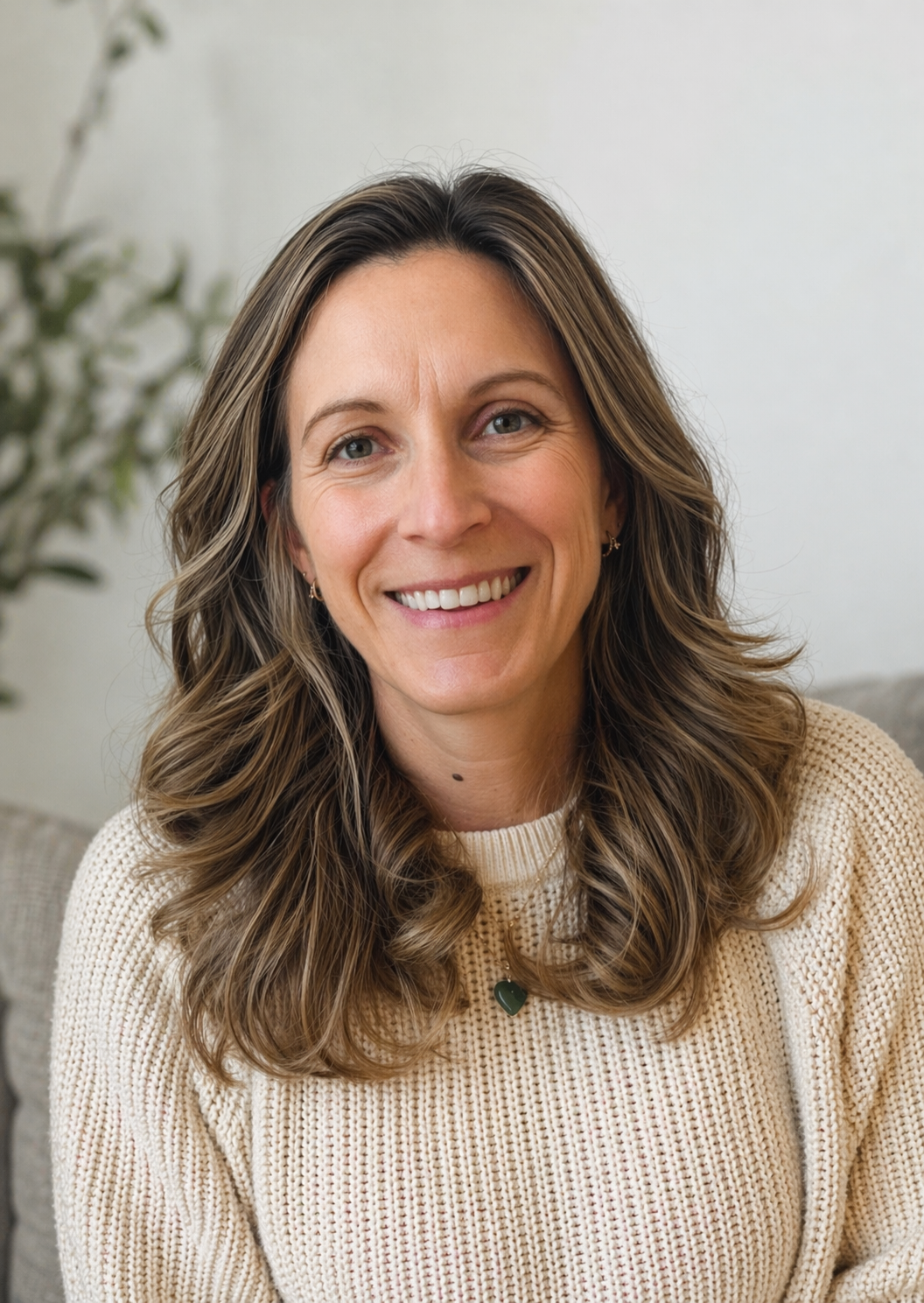
I'm Erin Eastwood, LCSW, PMH-C -- a psychotherapist based in Brooklyn with over 15 years of clinical experience working with children, adolescents, and adults.
I work with people navigating some of life's most demanding chapters: the seismic shift of becoming a parent, the weight of trauma carried for years, the particular exhaustion of high-pressure careers, grief in its many forms, and the quieter but no less real work of figuring out who you are and what you want.
Whether you're coming to therapy for the first time or you have a long history with depression, anxiety, or OCD and are looking for a more sophisticated approach, I have the training and experience to meet you where you are.
As a Brooklyn-based parent myself, I bring both clinical training and lived experience to the work. I'm committed to creating a space that is affirming, equitable, and genuinely open to the full complexity of who my clients are -- their identities, their histories, and their goals.
In addition to my clinical work, I provide supervision to emerging clinicians -- work I find deeply meaningful.
How I work
My approach is integrative and deeply relational. I draw on psychodynamic principles, somatic and body-based therapies, and attachment theory to understand not just what a client is struggling with, but why -- and what getting unstuck actually requires.
I don't believe in one-size-fits-all therapy. Some clients need to talk through the story. Others need to work with what lives in the body. Most need both. I follow the client's lead while bringing genuine clinical curiosity and directness to the work.
I'm particularly interested in intergenerational patterns -- how the experiences of previous generations shape the way we attach, parent, and move through the world -- and how those patterns can shift.
Training and background
I bring a wide lens to clinical work, and I think that makes me a better clinician. I hold a Master of Social Work from Fordham University, where I received specialized training in trauma-informed practice, and have spent the years since building a clinical foundation that spans somatic, relational, attachment-based, and evidence-based modalities.
Before focusing on psychotherapy full time, I spent nearly a decade working across New York City's government and nonprofit sectors: conducting research on families experiencing homelessness, contributing to public transparency around conditions in city jails, and providing direct clinical services to survivors of domestic violence and trauma. That work sharpened my understanding of how systems, identity, and structural inequality shape individual lives -- and it informs everything I do clinically.
I am committed to culturally responsive, equity-centered care and welcome clients across a wide range of identities, backgrounds, and experiences
My clinical training spans evidence-based, somatic, and relational modalities:
Perinatal Mental Health Certification (PMH-C)
Sensorimotor Psychotherapy
Trauma-Focused Cognitive Behavioral Therapy (TF-CBT)
Dyadic Therapy - Parent/Infant Therapy
Intergenerational Attachment Research
DBT and CBT
Exposure and Response Prevention
Psychodynamic Therapy
Areas of Specialization
Parenthood, perinatal mental health, and perinatal loss
The transition to parenthood is one of the most profound identity shifts a person can experience -- and one of the least talked about honestly. Whether you're navigating infertility, IVF, a difficult pregnancy, postpartum depression or anxiety, late-term loss, or the complicated emotions of early parenthood, I offer a space where the full range of what you're feeling is welcome. I hold a Perinatal Mental Health Certification (PMH-C) through Postpartum Support International and have specialized training in parent-infant and dyadic therapy, working with the parent-child relationship itself as a unit of treatment. I also draw on research into intergenerational attachment patterns -- because how we were parented shapes how we parent, and that cycle can shift
Trauma recovery
Trauma doesn't always look like a single dramatic event. Often it's the accumulation of early experiences -- relational ruptures, systemic harm, intergenerational patterns -- that shape how we move through the world without us fully realizing it. My approach to trauma is both somatic and relational: I use Sensorimotor Psychotherapy and Trauma-Focused CBT to help clients work with what lives in the body, not just the narrative mind. I believe healing from trauma requires safety, pacing, and a therapeutic relationship built on genuine trust -- and I take all three seriously.
High-pressure careers and professional burnout
You're very good at your job. You're also exhausted, maybe resentful, and increasingly aware that the way you're working isn't sustainable. Lawyers, physicians, nurses, public defenders, first responders, and others in high-stakes roles often carry an enormous amount -- including the secondary trauma that comes from doing difficult work, day after day, with little room to process it. I work with high-achieving professionals on burnout, vicarious trauma, boundary erosion, and the particular challenge of turning off when your job never really does. I also understand that for many people in these fields, asking for help feels like a professional risk -- and I take that seriously too.
Men's mental health
Men are often socialized to manage, fix, and push through -- which works until it doesn't. I work with men navigating the transition to fatherhood, relationship strain, career pressure, past trauma, and the quieter but no less real experience of feeling disconnected from themselves or the people they love. We work from where you actually are, at a pace that makes sense, and I bring directness, genuine curiosity, and solutions to each session.
Grief is not a problem to be solved or a timeline to move through. It's a process of integrating loss into a life that has to keep going -- and that looks different for everyone. I work with clients navigating the death of a loved one, pregnancy loss, infertility, the end of a relationship or career, early childhood losses that were never fully mourned, and the losses that don't have a name or a ritual. I also have specialized experience with perinatal grief -- the particular pain of losing a pregnancy or baby, which is so often minimized by the world around it.
Grief and loss
Some of the hardest moments in life aren't crises -- they're transitions. A new city, a new relationship, a new role, a loss of one. Major life changes have a way of surfacing bigger questions about who you are, what you value, and what kind of life you actually want to be living. I work with people in the middle of those questions -- not to rush them toward an answer, but to create the space to think more clearly, feel more fully, and move forward with more intention.
Life transitions and identity
The patterns we bring to our relationships -- romantic, familial, professional -- are rarely random. They're shaped by our earliest experiences of connection, rupture, and repair. I help clients explore how attachment history shows up in their current relationships: why they pursue or withdraw, why certain dynamics keep repeating, what intimacy actually feels like versus what they've settled for. Whether you're struggling in an existing relationship, navigating dating, or trying to understand why connection feels so hard, I bring both clinical depth and genuine warmth to that work.
Relationships and dating
Contact me
Interested in working together? Fill out some info and we will be in touch shortly. We can’t wait to hear from you!